
A shift is underway that has implications for leaders developing AI-assisted workflows. In recent months, even some technology leaders have begun revisiting an idea that once seemed unfashionable: the enduring value of the humanities. As AI becomes more capable, qualities often associated with disciplines like psychology, philosophy, and literature are being reframed as professional advantages rather than academic luxuries.
In a recent New York Times opinion piece, columnist Maureen Dowd explored the renewed interest among AI technologists in liberal arts education. In the piece, sources suggest that a deeper understanding of human behavior, ethics, history, and enduring narrative themes might help younger professionals gain an edge in an AI-rich workplace. The notion is striking: the more sophisticated AI becomes, the more valuable distinctly human capabilities become.
The implications for leaders engaged in workflow design or redesign run deeper than the superficialities sometimes associated with Human-in-the-loop (HITL).
In this space, I have written about HITL as a safeguard for ensuring human judgment remains central to AI-assisted work. In a previous blog post, I argued that effective HITL requires cognitive friction—intentional pauses for questioning, verification, and reflection that are distinct from mere review and approval.
The challenge for today’s leaders is twofold: First, to ensure meaningful human engagement in AI-assisted workflows; and second, to ensure that humans drive the continuous improvement of those workflows.
That is where HITL as a leadership practice comes in.
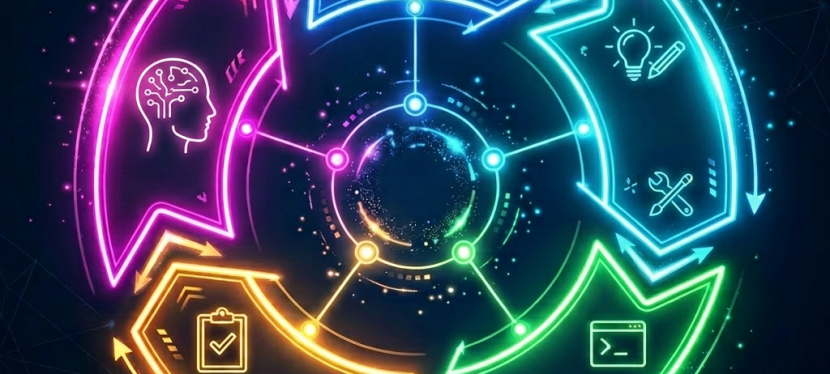
In this blog post, I offer a practical HITL leadership model—a repeatable process for keeping human engagement intentional, your team’s relationship with AI collaborative, and AI-assisted workflows continuously improving.
Read more

